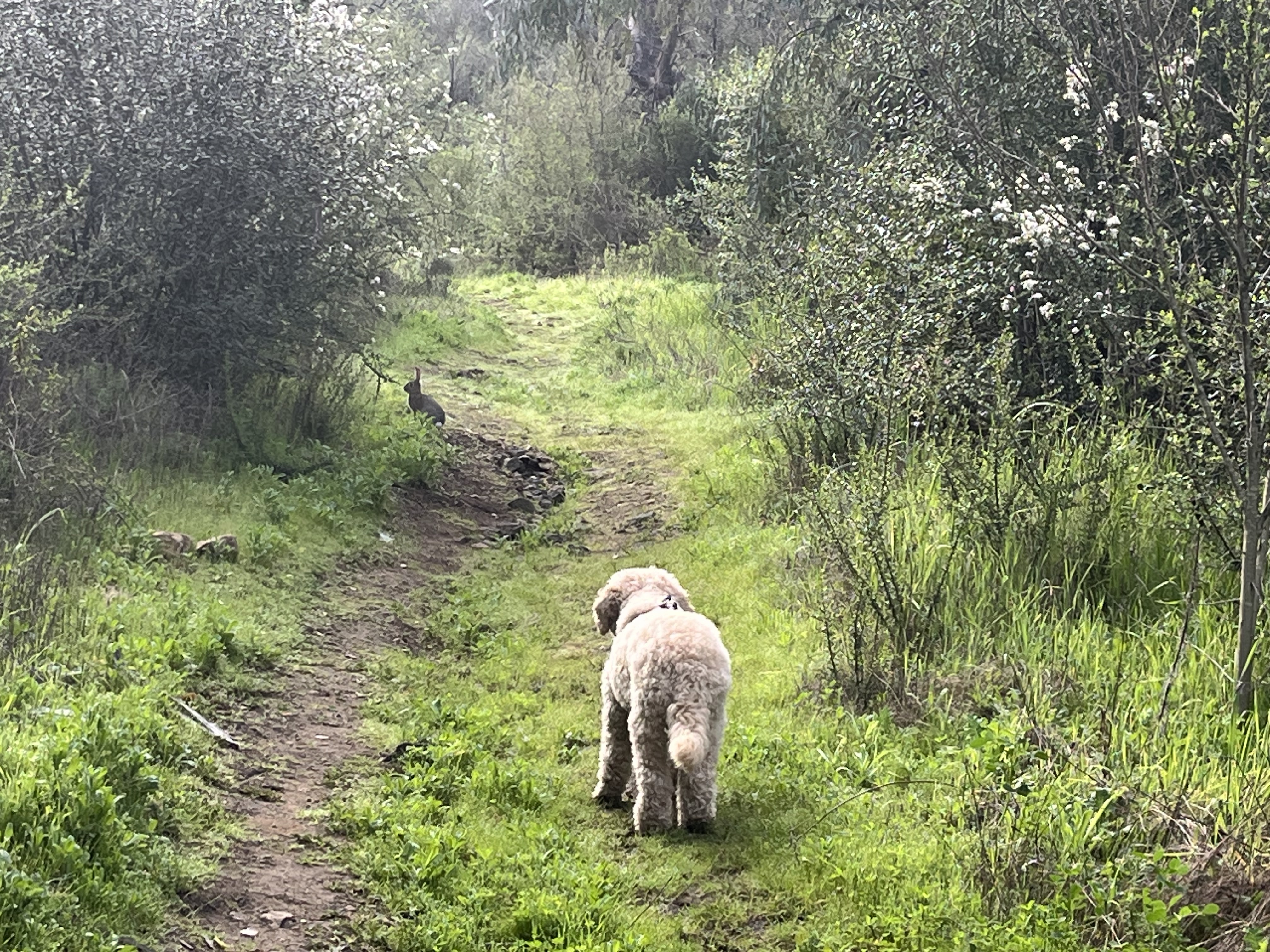
In 2010, I was sixty years old (chronological age 60, biological age, 40) and out on a hike with my friend Richard and my neighbor’s young Golden Retriever puppy named Rocky. Rocky was sweet and in desperate need of running, playing and training. I had just lost my own Golden Retriever to cancer and was grieving, so the timing was good for both of us. The Pet Parents of Rocky were two young college students who had no idea how to care for him. Each day, they would go off to school and leave him home by himself all day. When I heard him crying as I walked past the house, I got the OK to walk him and spend time with him when they were gone.
The puppy was going through the “chewing” phase and by the time I arrived to take him for a hike on this particular day, he had already chewed through the stacks of magazines in the living room, the sheets on the bed and even the paint on the walls. Off we went and when we arrived at the trailhead, I released him from his leash and let him go…This was the start of his inquiry and exploration into being a grown hunting dog and the beginning of my journey into bone health.
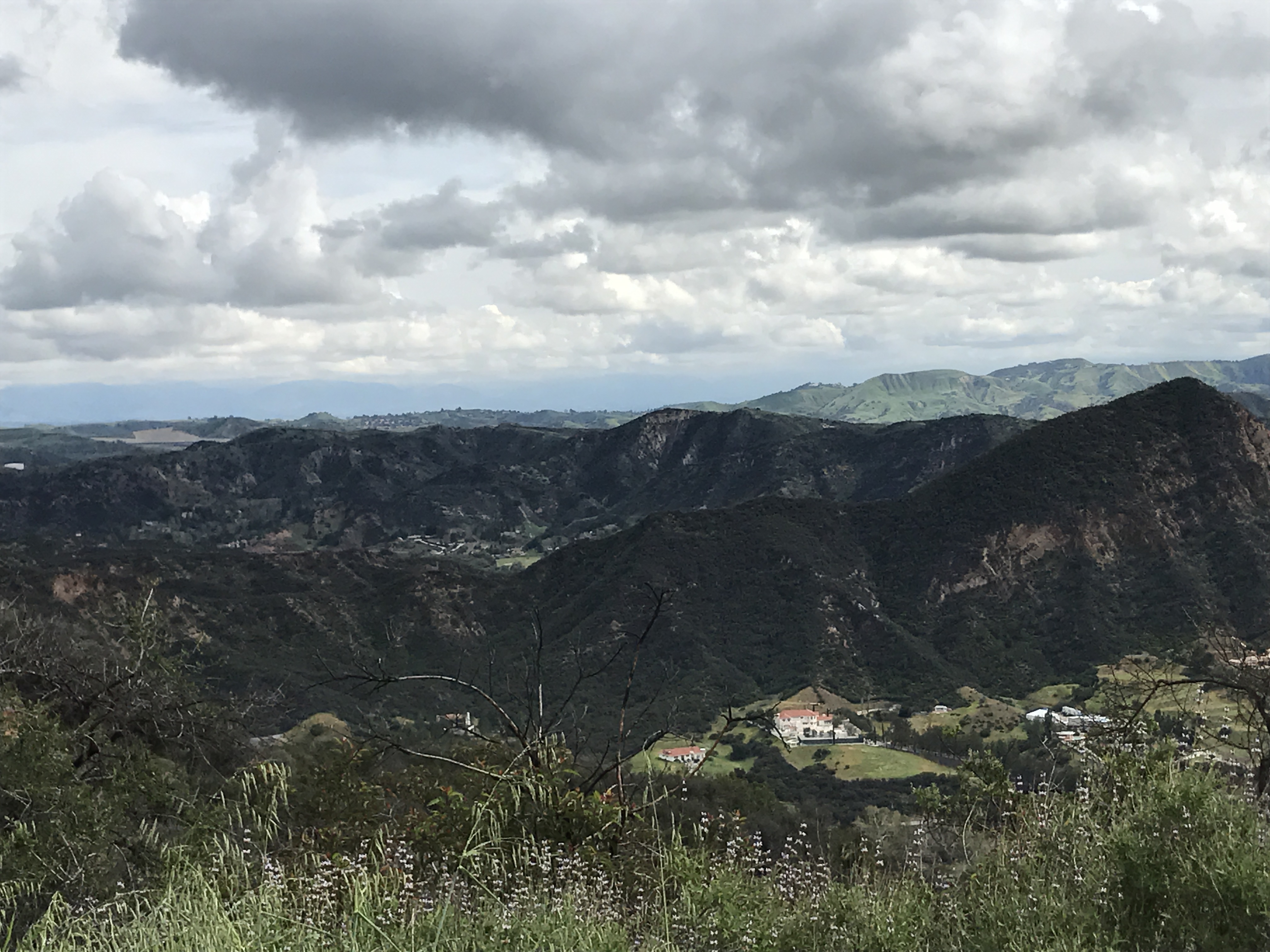
Up until that point, I had never broken a bone or taken a DXA scan to check my bone density. I was very active, hiking nearly every day, swimming on a Master’s Swim Team at Pepperdine University, becoming certified as a Yoga teacher and teaching several times a week. All these activities kept me moving, plus my work as a Chiropractic Physician and Structural Integrative Therapist; it felt like I never stopped moving. When the puppy knocked me down on the steep, rocky trail, he got up and, as dogs do, shook himself off; I attempted to follow his lead, but when I tried to get up off the ground, I could not stand up. It was such a strange feeling; when I discovered that I had fractured both my pubic bones in the front of my pelvis, it made sense. I was not a four legged creature…
Like In A Dream
As I hit the ground, I heard a lone voice from a distance calling to us, asking if we needed help. Aside from Richard and I and the puppy, there was no one else on the trail we were on. A young, tall, very fit guy came walking toward us carrying a mountain bike; I told him what had happened and instantly, he dropped his bike and swept me up in his arms to begin the journey down the mountain. He told me, “I’m an EMT (emergency medical technician); I’ll get my bike later,” and we made our way down the mountain with me in his arms. I felt like a bride - I had never been carried like that at such a distance. By the time we got to the end of the trail, Richard had pulled the car up to the trail and was waiting for us. The EMT carefully placed me in the car with Richard and Rocky and before he left us, I asked him what his name was; “My friends call me J.C.”, he answered, and that was the last time I ever saw him.
Pain
As I said, this was my first experience fracturing bones. In addition, I had never spent time as a patient in a hospital and, perhaps most importantly, had never experienced bone pain, the most serious pain of all the body parts. When the nurses tried sliding me off one bed to another, I screamed like a maniac at the top of my lungs, not caring who heard me. For good reason; that day I had fractured several ribs, my sternum and both my pubic bones. Because the pubic bones, (the two small bones in front of the pelvic bowl that help to create the bowl shape) were not articulating together; every time I took a step they would separate and move in different directions, requiring me to use a walker so that I could stand and balance.
As one might imagine, taking care of myself was difficult, so I decided to spend some time with my mother in Orlando as I waited to heal. She was close to ninety years old at the time and I knew I was in trouble when I couldn’t keep up with her using my walker. When traveling, also for the first time, I had to use a wheelchair at the airport.
Another first was receiving a DXA scan, a type of X-ray that shows the bone density of hard cortical bone in different areas of the body. The results of that scan were, -2.5, considered a borderline score between Osteopenia and Osteoporosis. A few doctors commented that the score, “wasn’t so bad”. At that time, I had no idea what that meant and it took almost a year to finally return to California where the life I knew was waiting for me.
I had read that once you experience your first fracture, it can be followed by a few more. In my case, that was true; during the next decade, I experienced two more fractures that also occurred while I was hiking on two different occasions. I endured three surgeries after the last incident involving my right wrist and forearm where two different surgeons inserted a long plate in my forearm that was removed a month or two later. This was the incident that finally woke me up, forcing me to pay attention and find out why I was continuing to fracture bones when the DXA scans were not changing. This took more research on my part.
The Many Forms Of Connective Tissue
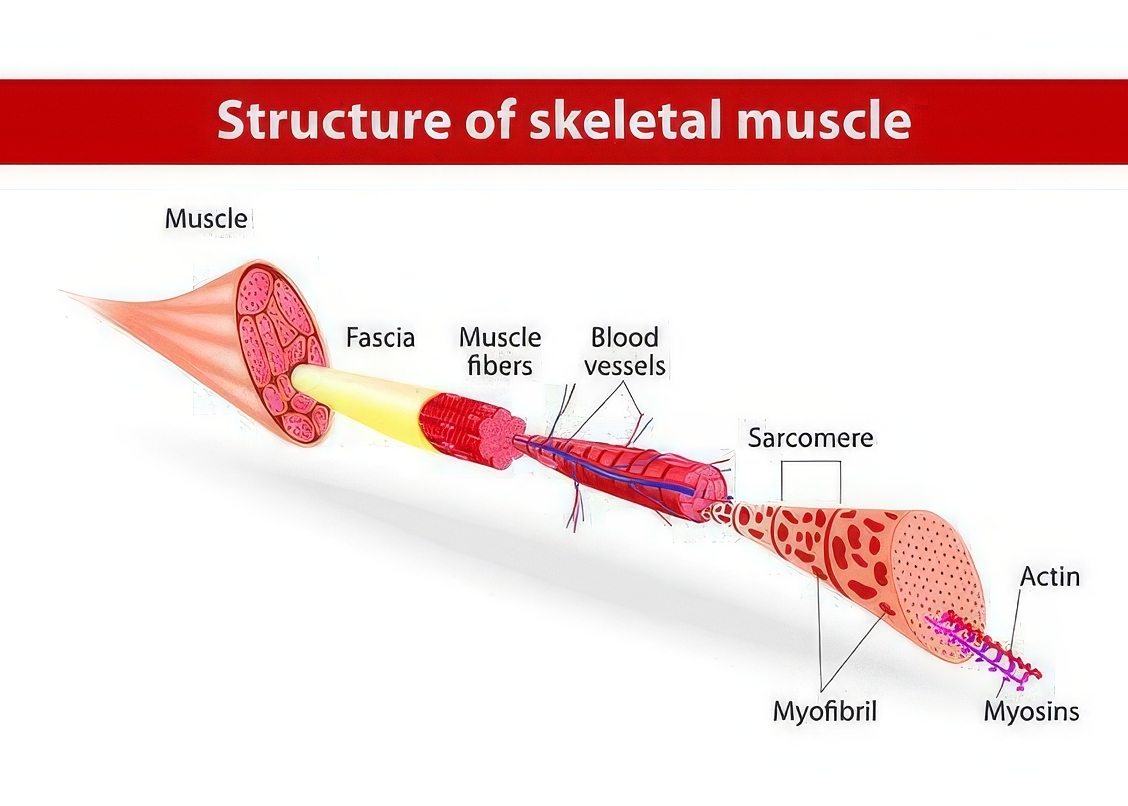
Believe it or not, bone is a form of connective tissue, also called fascia. It is defined like it sounds: The many forms of connective tissue “connect” the tissues of the body and can be dense and hard, like bone, or can also be liquid, like blood and lymph fluid. The bottom line is that we would fall apart without our connective tissue.
Our human bones are made up of hard, dense bone, called cortical bone and Trabecular bone, also known as “spongy bone”, for its soft, flexible qualities. The DXA scan only measures cortical bone, the density of the bone, usually on the outside edges of the bones and not the trabecular bone, the spongey inside parts, which measures the quality of our bones. Trabecular bone can only be measured on a special software scanner that is connected to the DXA scanner. It is important that before you take your first DXA scan, you find out whether that machine also has a TBS (Trabecular Bone Score) attached to it (See below).
A Condition of Overage or Over Use?
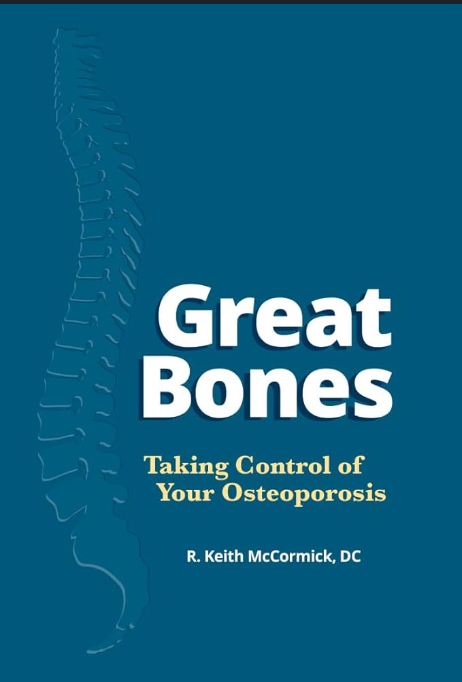
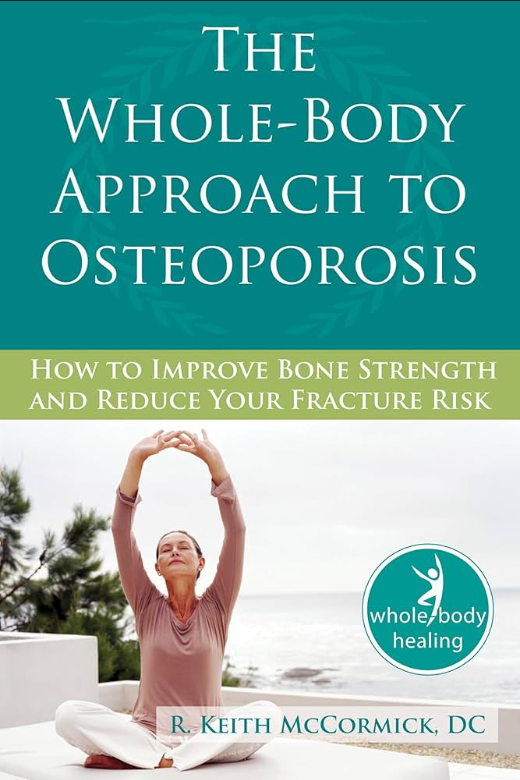
When we think of a bone dis-ease, like Osteoporosis, what comes to mind are aging women. As women move into Menopause they reduce their hormone levels, especially the group of Estrogens. With the reduction of Estrogens, we also reduce our muscle and bone density. This is not, however, the only population that has this condition. Although women do outnumber men when it comes to bone disease, men also have the condition and they can often be young male athletes. Chiropractor and athlete, Keith McCormick discovered the diagnosis of Osteoporosis after fracturing over a dozen bones in his hips while running in a marathon; his total number of fractured bones was twenty-two, before he decided to take it seriously and find out why this was happening. After deep research and two published books on the subject, he was able to turn his diagnosis around and show people that a diagnosis of Osteoporosis is not the end of an active life. He is now back to running marathons and triathlons.
What Can We Do?
Since my first fractures and DXA scans, I have learned that bone density isn't the only important factor to measure. After several tests where my DXA scores did not change, I learned that the problem was in the Trabecular bone, which had not been measured. This is where the trabecular bone score (TBS) comes in as a major factor and absolutely should be tested as well. As stated above, our bones are made up of hard, dense cortical bone and Trabecular bone, also known as "spongy bone," for its soft, flexible qualities. While the T-score from a standard DXA primarily reflects overall density, the Trabecular Bone Score (TBS) provides crucial insight specifically into the quality of this inner, "spongy" tissue. Not all DXA scan machines are capable of testing the trabecular bone, so care should be taken when searching out these tests. Find a machine that is able to do both and stick with that machine. In addition, you may also want to stay with the same technician, who will place your body in the same way, without changing.
Included is a link to a website that will allow you to search for offices that have these machines. I highly encourage everyone to take both the DXA and Trabecular tests sooner, rather than later. The idea that taking these tests is only necessary after the age of sixty-five, is an outdated concept that may create problems. Perhaps, do it for the simple reason that May is National Osteoporosis Awareness and Prevention Month.
In Honor of National Osteoporosis Awareness and Prevention Month
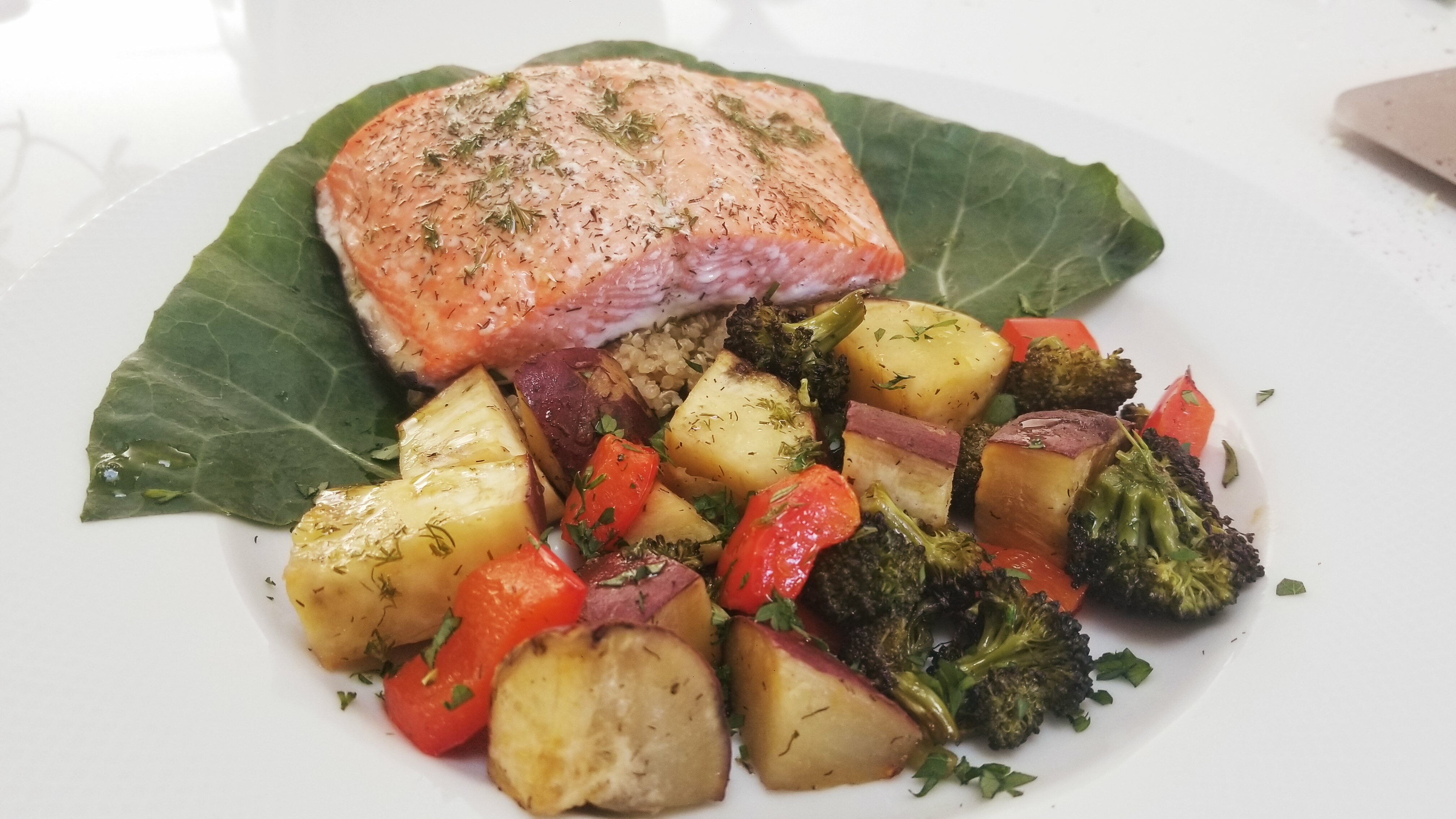
Here is a Home Recipe For Bone-Boosting Salmon & Roasted Vegetable Quinoa Bowls
This recipe features ingredients rich in Calcium, Vitamin D, Magnesium, and Vitamin K. It's a delicious way to support skeletal health, enhanced by the fresh taste of dill
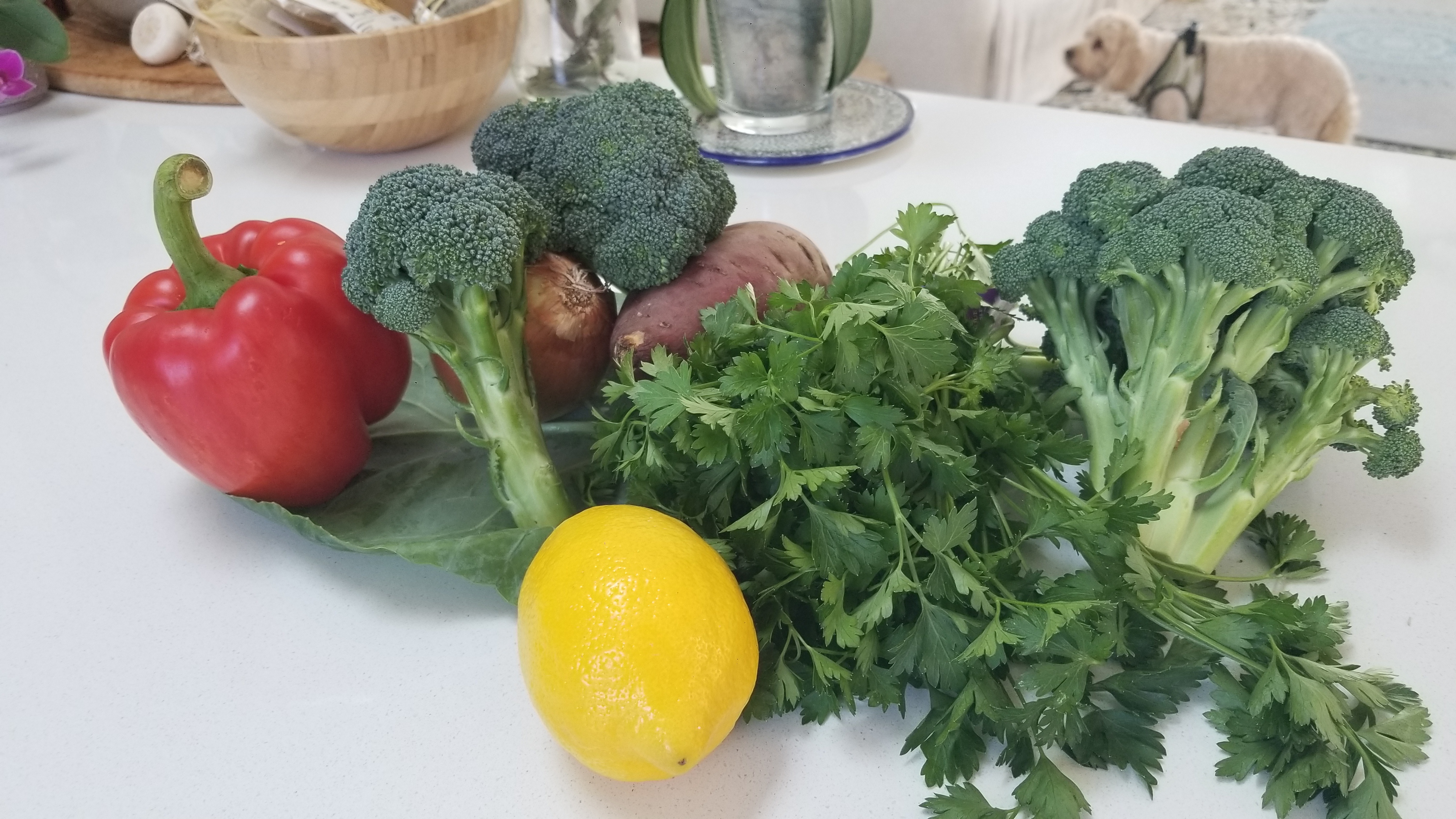
Ingredients
2 Salmon fillets (about 4-6 oz each)
1 cup Quinoa, rinsed
2 cups Low-sodium vegetable or chicken broth (or water)
2 cups Broccoli florets
1 large Red bell pepper, cut into chunks
1 medium Japanese Sweet potato, peeled and cut into 1-inch cubes
2 tbsp Olive oil
2 tbsp chopped Fresh dill (divided)
Salt and freshly ground black pepper to taste
1 or 2 Collard Leaves chopped and added to the roasting pan for the last 5-7 minutes, or served fresh under the bowl.
For the Lemon Dill Dressing
2 tbsp Olive oil
1 tbsp Fresh lemon juice
1 tbsp chopped Fresh dill
Pinch of salt and pepper
Instructions
Preheat Oven: Preheat your oven to 400°F (200°C).
Cook Quinoa: While the oven heats, combine the rinsed quinoa and broth (or water) in a small saucepan. Bring to a boil, then reduce heat to low, cover, and simmer for 15 minutes, or until the liquid is absorbed and the quinoa is cooked and fluffy. Remove from heat and let stand, covered, for 5 minutes.
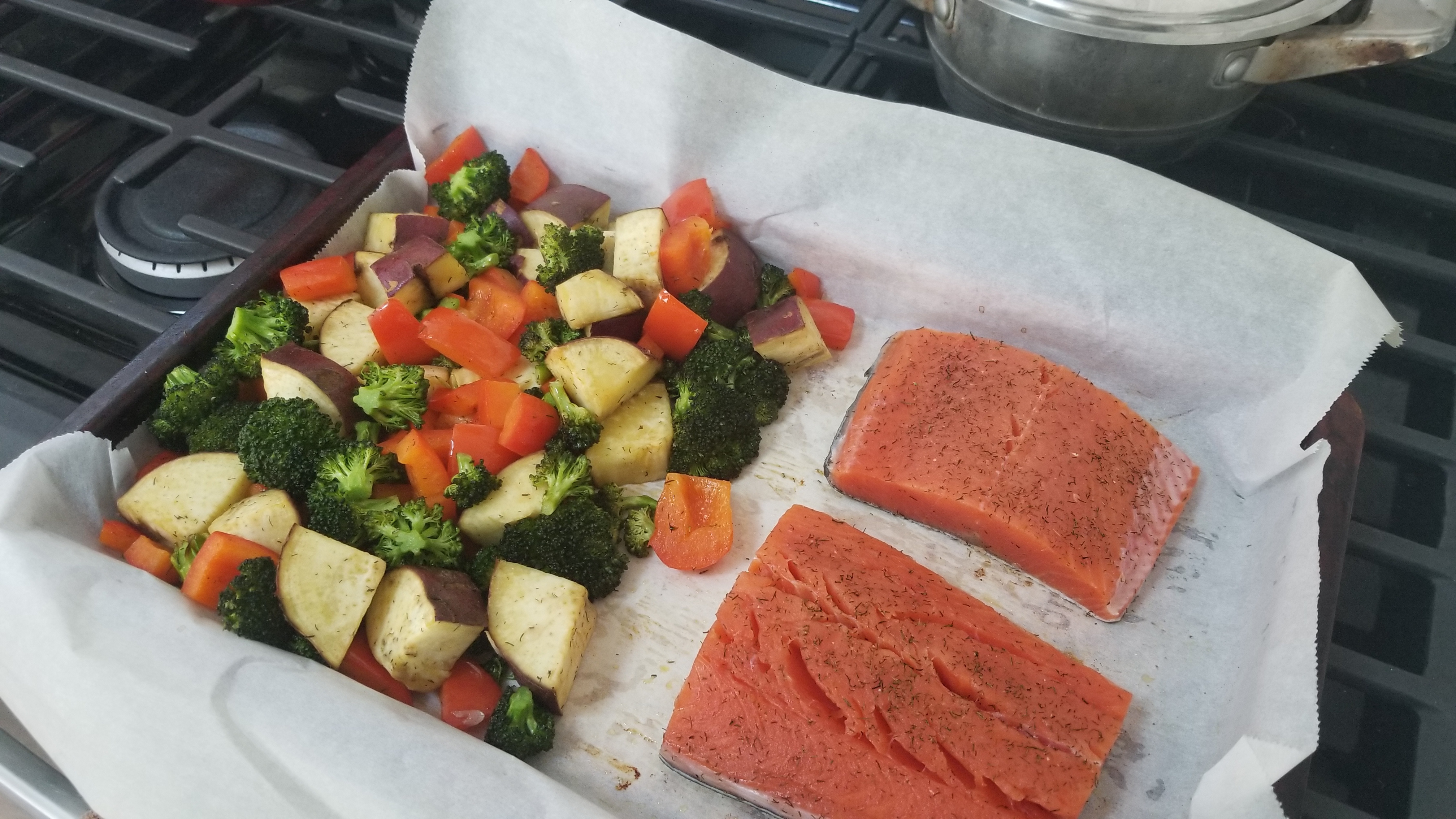
Prepare Vegetables: On a large baking sheet, toss the broccoli florets, red bell pepper chunks, and Japanese sweet potato cubes with 2 tablespoons of olive oil, 1 tablespoon of the fresh dill, salt, and pepper. Spread in a single layer.
Roast Vegetables: Place the baking sheet in the preheated oven and roast for 15 minutes.
Add Salmon: After 15 minutes, push the vegetables to one side of the baking sheet and add the salmon fillets to the other side. Season the salmon with a little salt and pepper and sprinkle the remaining 1 tablespoon of fresh dill over the salmon.
Continue Roasting: Return the baking sheet to the oven and continue roasting for another 10-15 minutes, or until the salmon is cooked through and flakes easily with a fork, and the vegetables are tender and slightly caramelized. (If adding collard greens, scatter them over the vegetables during the last 7-10 minutes of roasting).
Make Dressing: While the salmon and vegetables finish roasting, whisk together the dressing ingredients (olive oil, lemon juice, fresh dill, salt, and pepper) in a small bowl.
Assemble Bowls: If you did not add the collards to the roasting pan, you can add whole leaves into each bowl, then divide the cooked quinoa between two bowls. Top with the roasted vegetables and salmon fillet. Drizzle with the lemon-dill dressing.
Serve: Enjoy your delicious and bone-nourishing meal
Why This Recipe?
Salmon: An excellent source of protein, needed to increase muscle mass and Vitamin D, a hormone needed for the absorption of Calcium. Make sure that you bake the Salmon with the skin and, if possible eat the skin where the important anti-inflammatory Omega 3 fats live.
Quinoa: Provides valuable minerals like magnesium and phosphorus, which are key components of bone structure. Quinoa is one of the few non-protein foods with all nine essential amino acids, making it an important food to build protein on a Vegan diet.
Broccoli & Bell Peppers: Offer Vitamin C, important for collagen production in bones. Broccoli also offers a key Sulphur compound called, Sulfurophane, which in its sprouted form can prevent breast cancer.
Japanese Sweet Potato: A delicious source of complex carbohydrates and fiber, these amazing foods contain polyphenols, typically found in deeply colored vegetables, like herbs, spices, tea and dark chocolate. When you see any purple, red or blue vegetables and fruit, you are in the right place. I am drawn to the beauty of purple sweet potatoes, as well as red cherries, coffee beans and Cacau. The women of Osaka japan, the oldest women in the world who live in one of the Blue Zones, plant purple sweet potatoes in their gardens so that seventy percent of what they eat are these wonderful sweet potatoes. Just think “color”, like purple, when choosing your vegetables.
Collard Greens: These hearty greens are a fantastic source of Vitamin K, vital for bone metabolism and directing calcium to the bones, and also contribute a good amount of calcium.
What is Health Coaching?
When I first learned about Functional Medicine and Health Coaching, it completely resonated with my heart and I knew I was in the right place. Functional Medicine health coaches help people create healthy, balanced lives at their own pace by recreating lifestyle habits.This is individualized care that is purely client centered, positive and compassionate in every way.
Unlike standard medical care, whose focus is on Acute Care, health coaches spend time with people, supporting them through the things that they choose and are important to them. When treating chronic illnesses, like Type 2 Diabetes, Obesity and Autoimmune conditions, it takes Health Coaches who can spare the time to work with individualized Lifestyle conditions, like Nutrition, Movement, Sleep, Stress and Relationships.
You received this email because you signed up to the updates from The Smart of Living. Click here to unsubscribe if you do not want to receive emails from us.